



Woven Into South Carolina
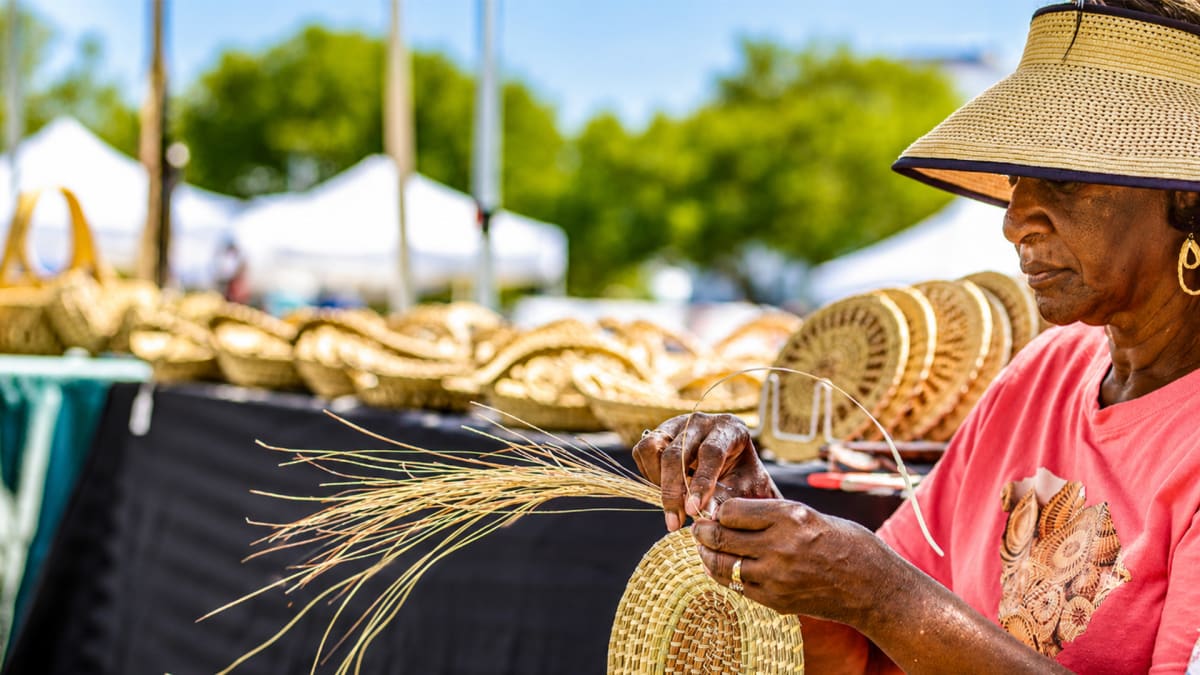
A sweetgrass basket begins with simple materials and patient hands. By the time it’s finished, it carries generations of Lowcountry history, family knowledge and artistry woven tightly enough to last.
More Than Something to Carry
The 22nd Annual Sweetgrass Festival returns to Mount Pleasant on Saturday, July 25, from 10 a.m. to 3 p.m. The free celebration brings basket makers, artists, craftspeople, performers and families to Memorial Waterfront Park, where the Cooper River provides a fitting Lowcountry backdrop.
Visitors can browse handmade sweetgrass baskets alongside jewelry, crafts and other locally created goods, then stay for entertainment, activities and educational sessions designed to share Gullah Geechee culture with all ages. The festival gives makers a place to sell their work, but its purpose reaches well beyond shopping. It creates space for conversation, demonstration and the passing down of stories that cannot be separated from the finished pieces.
Sweetgrass basketry has been practiced in the Lowcountry for more than 300 years and traces its roots to West African basket-making traditions carried by enslaved people. Early baskets served practical purposes, particularly in rice cultivation and household work. Generations of Gullah Geechee makers later adapted those methods using local sweetgrass, bulrush, palmetto and pine needles, transforming necessity into one of South Carolina’s most recognizable art forms.
A Tradition Still Taking Shape
South Carolina designated the sweetgrass basket as its official State Lowcountry Handcraft in 2006, a title that sounds formal for something so personal. Every basket reflects the choices and skill of its maker, from the gathering and preparation of materials to the slow coiling and stitching that shapes the final design. No assembly line can hurry that process, which may be precisely why the work feels so meaningful in a world built around faster everything.
The festival also reminds visitors that cultural traditions survive because people continue practicing, teaching and supporting them. Buying directly from an artist respects the labor involved, while asking thoughtful questions can reveal the family histories and techniques behind the work.
Spend an afternoon beside the river, listen closely and watch the makers’ hands. The most powerful South Carolina stories are sometimes passed along without a page, carefully sewn from one generation to the next.
Find more festivals celebrating South Carolina’s communities and traditions in the directory! https://guidetosouthcarolina.com/festivals