



Wild Things Close Up!
Forget the postcard version of South Carolina with a single palmetto tree and a beach chair. The real outdoor flex around here starts when your shoes pick up swamp mud, mosquito spray becomes part of the outfit, and somebody in the group suddenly whispers, “Wait… was that a dolphin?”
That’s the difference between looking at nature and actually getting inside it. Across the state, floodplain forests, tidal marshes, maritime woods, and wildlife preserves are turning regular weekend plans into the kind of outings people talk about the entire drive home. No two spots feel remotely alike either. One trail smells like wet earth and cypress knees after a summer storm. Another opens onto salt marsh so wide it looks painted at low tide.
Boardwalks, Bird Calls & Bottomland Forests
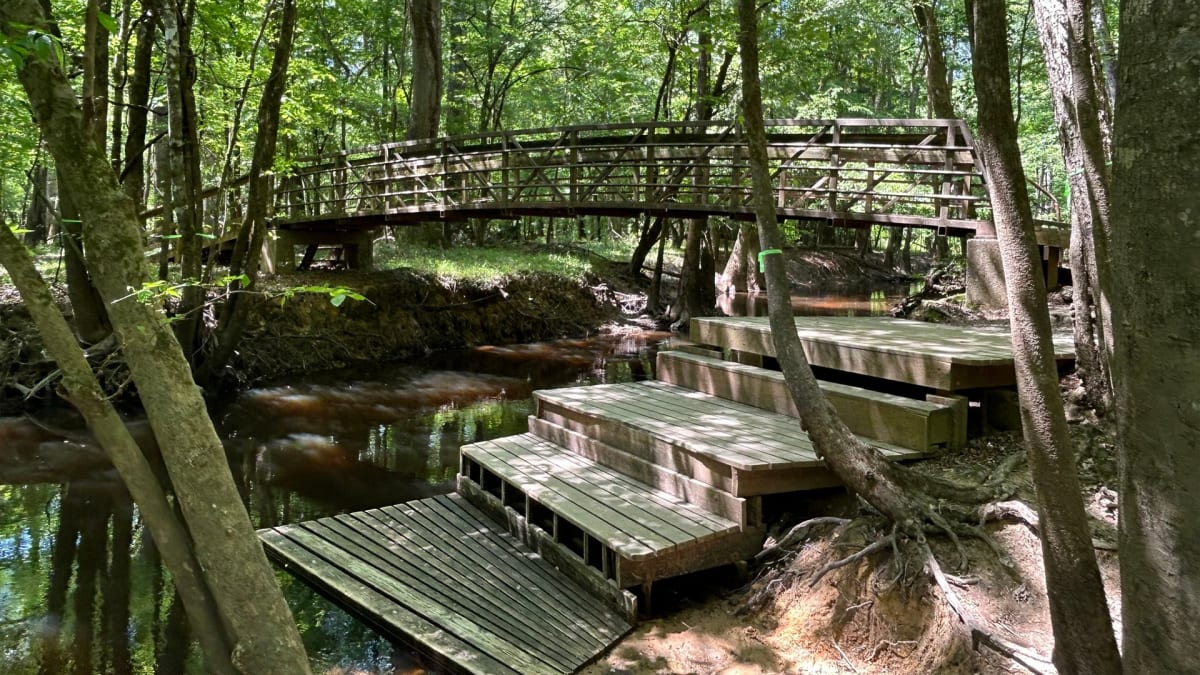
At Congaree National Park in Hopkins, the landscape gets big in a hurry. The park’s elevated boardwalk cuts through one of the largest intact old-growth bottomland hardwood forests in the Southeast, and the scale catches people off guard every single time. Bald cypress and water tupelo trees tower overhead while muddy floodwaters move quietly beneath the trail after heavy rain. Barred owls echo through the woods loud enough to stop conversations mid-sentence, and during late spring, synchronous fireflies turn parts of the park into a blinking light show that feels almost fake in person.
Farther down the coast, Hunting Island State Park shifts the scenery completely. Driftwood-covered shoreline, palmetto-lined trails, salt air, and wide beaches all collide in the same stretch of park. Loggerhead sea turtles return to nest along the shoreline during warmer months, while shorebirds dart along the surf line hunting for lunch. The lighthouse climb still earns bragging rights afterward, especially in July humidity.
Marshes, Maritime Forests & the Quiet Parts of the Coast
The Lowcountry delivers some of the most layered ecosystems anywhere on the East Coast, especially inside Hollywood’s Ernest F. Hollings Ace Basin National Wildlife Refuge. Tidal rivers shape nearly everything here. Water levels rise and fall constantly, dolphins surface in the creeks, and wading birds stalk the marsh grass like they own the place. Honestly, they probably do.
For a quieter, rougher experience, the Victoria Bluff Heritage Preserve near Hilton Head Island trades crowds for longleaf pine forests, tidal creeks, and wildlife habitats managed through prescribed burns and conservation work. Then there’s the South Carolina Aquarium, where river otters, stingrays, and rescued sea turtles connect all those ecosystems back to the waterways people spend weekends exploring.
Turns out, the best local nature trips don’t come with perfect cell service or spotless sneakers. They come with binoculars, sunscreen, bug spray, and at least one photo nobody believes you took yourself.
Discover more places to get in touch with the great outdoors at https://guidetosouthcarolina.com/recreation-places.