



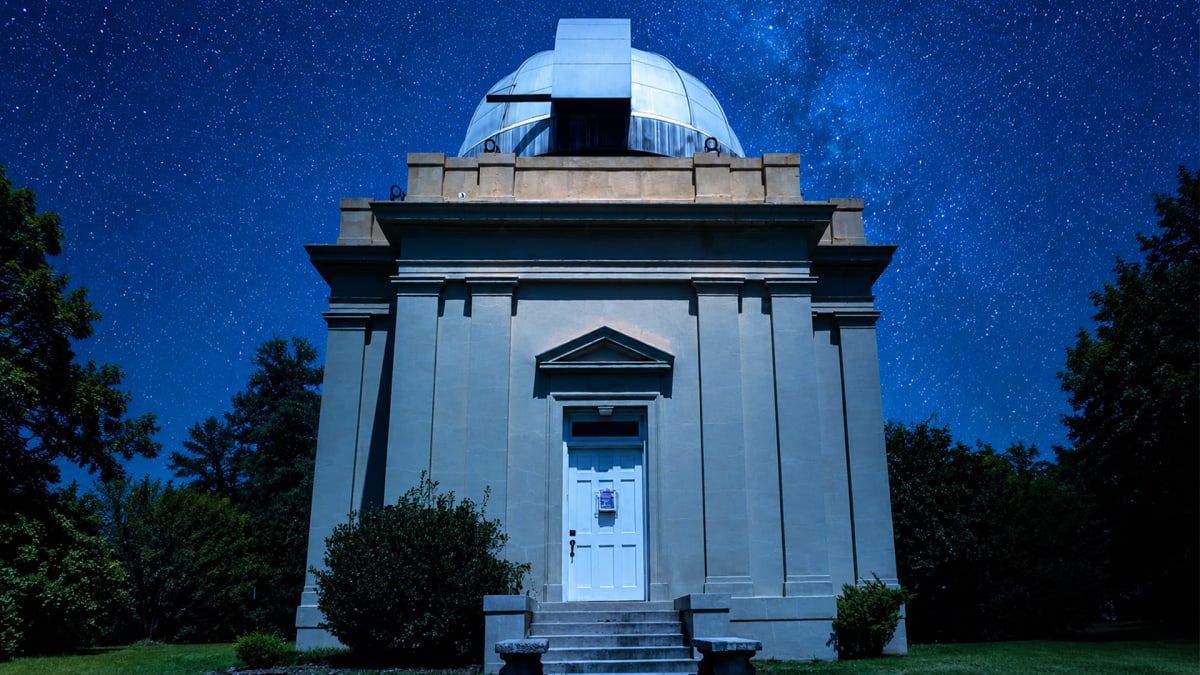
The Sky’s the Show
September 22 brings the autumnal equinox, and with longer nights ahead, South Carolina gets a little more room for an overlooked fall pastime: looking up.
Start With the Dark
The good news for beginners is that stargazing requires remarkably little gear. Skip the telescope at first. A chair or blanket, water, bug spray and a red-light flashlight are enough to get started. Check the weather and moon phase before leaving, then give your eyes roughly 20 to 30 minutes to adjust to darkness. Bright phone screens are particularly good at undoing that progress.
For a coastal introduction, Hunting Island State Park near Beaufort puts the Atlantic on one side and a much darker horizon overhead than most neighborhoods can manage. The park’s ranger-led Park After Dark program heads toward the lighthouse and North Beach for stargazing after regular daytime activity winds down. The September 18 program runs from 7:30 to 9 p.m., requires preregistration and costs $5 per person in addition to park admission.
Upstate, Oconee State Park in Mountain Rest trades ocean horizon for mountain country. The park sits in South Carolina’s northwest corner, with trails extending onto U.S. Forest Service property. During Daylight Saving Time, park hours extend to 9 p.m. daily, making an early-evening sky watch possible without an overnight stay. Always check current hours before planning around sunset.
Learn the Sky Before Chasing It
Darkness is useful, but knowing where to look helps. Columbia’s Melton Memorial Observatory opens on clear Monday nights from 9 to 11 p.m. during daylight saving time, offering free public viewing through its 16-inch Cassegrain telescope and smaller telescopes on the deck. Depending on conditions, visitors may see the moon, planets, stars and star clusters.
At Clemson University Planetarium, free fall-semester programs teach visitors to identify the current moon phase, visible planets and seasonal constellations, useful homework before heading outside. Shows are offered at 6 p.m. most Wednesdays, with reservations required for the 38-seat planetarium.
Columbia adds another option at the South Carolina State Museum’s Boeing Observatory, home to a historic 1926 Alvan Clark refracting telescope. The observatory offers weather-dependent solar viewing during museum hours and nighttime observing on select special-event dates.
A dark site helps, but patience matters just as much. Choose a clear night, pay attention to the moon, let your eyes settle and start with whatever is visible overhead. The season’s best show may begin after South Carolina turns out the lights.
For more family-friendly places worth building into an outing, browse the Guide to South Carolina directory at https://guidetosouthcarolina.com/family-amusement-places.