



The Power Inside the Machine
The components carrying some of America’s largest supply-chain risks are often small enough to disappear inside an engine, aircraft or electronic device. South Carolina is preparing to manufacture more of them at home.
From Raw Material to Finished Magnet
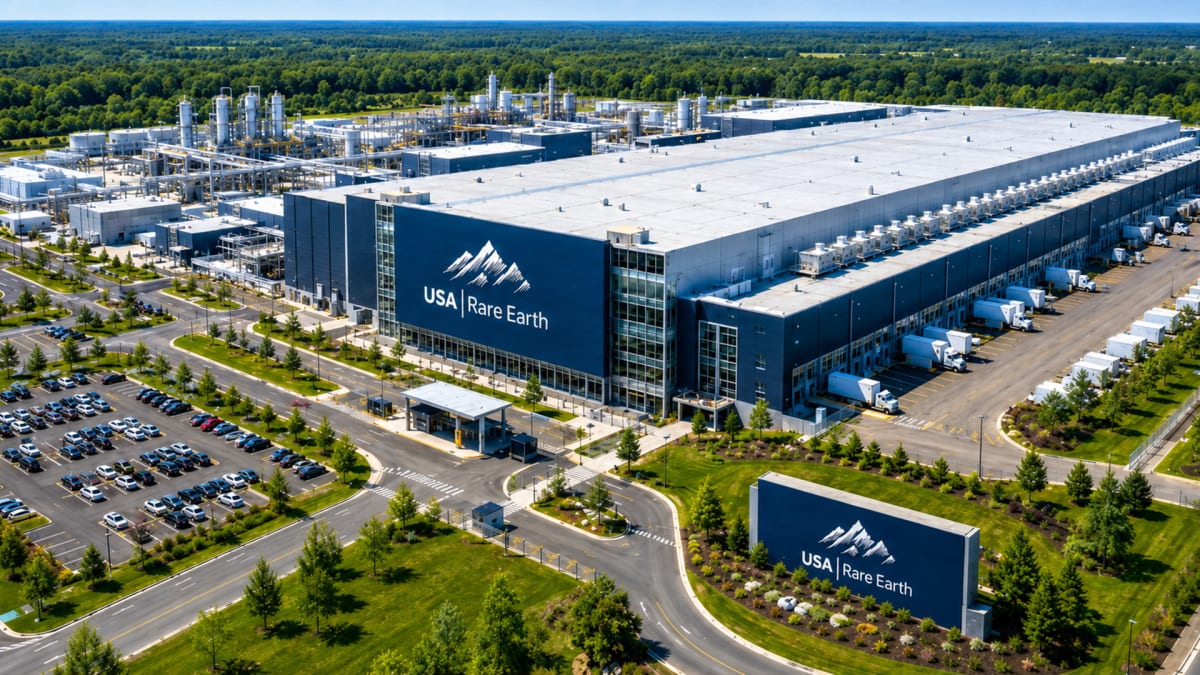
USA Rare Earth plans to invest approximately $1.2 billion in an advanced manufacturing campus at Bailey Park in Blacksburg, creating about 490 jobs in Cherokee County. According to the state’s USA Rare Earth project announcement, operations are expected to begin in April 2028.
The facility will produce neodymium-iron-boron permanent magnets and refined rare-earth metals. Those magnets help power electric motors, aircraft systems, electronics, energy technologies and defense equipment, yet the supply chain behind them remains heavily dependent on other countries.
This will not be a factory devoted to one finishing step. Plans call for electrolysis, metallothermic reduction, strip casting, jet milling, pressing, sintering, heat treatment, machining and coating. In plain English, the campus is designed to turn processed materials into precisely engineered components ready to work inside sophisticated machinery.
That depth matters. A domestic manufacturer gains little independence if critical material must still travel overseas for refining, shaping or finishing before it becomes usable.
Building the Missing Links
South Carolina already has a substantial advanced materials industry, with companies producing plastics, composites, optics, photonics and specialized materials for complex products. The Blacksburg project adds another capability to that industrial base, placing rare-earth metal processing and magnet production within a state experienced in automotive, aerospace and advanced manufacturing.
Research underway at Savannah River National Laboratory in Aiken addresses an earlier link in the same chain. Through a U.S. Department of Energy critical-materials initiative, researchers were selected to develop a commercially viable method for converting separated rare-earth feedstock into highly pure metal.
Federal officials report that more than 95% of the nation’s rare-earth supply currently comes from foreign sources. Closing that gap requires more than opening a mine. Materials must be separated, refined, converted into metal and manufactured into components at commercial scale.
South Carolina is beginning to connect those stages. Laboratory research in Aiken could help improve how rare-earth metals are produced, while the planned Cherokee County campus would turn refined material into finished magnets.
The future of American manufacturing may depend on parts few customers will ever see. Inside the machine, however, those small components help make nearly everything else move.
Find more companies shaping South Carolina’s industrial future in the directory: https://guidetosouthcarolina.com/manufacturing.