


The Future is Studying Up!
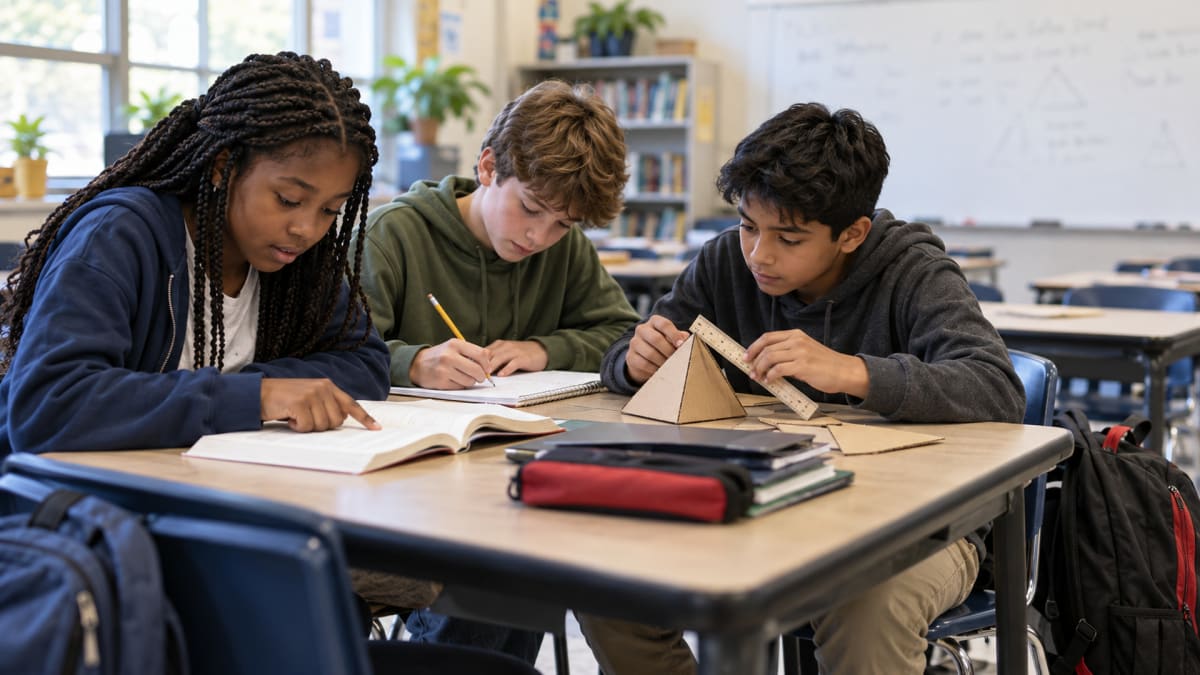
South Carolina’s future workforce is still carrying backpacks. The state’s newest test results show more students meeting grade-level expectations, offering employers an early look at the skills taking shape long before the first résumé is written.
The 2025–26 results released by the South Carolina Department of Education were the strongest in the history of SC READY.
Across grades 3 through 8, 61.3% of students met or exceeded expectations in English language arts, up from 59.6% in 2025. Math made an even larger jump, rising from 43.9% to 47.9%.
Those percentages belong in an education conversation, certainly. They also belong in a workforce conversation.
Today’s Test Scores, Tomorrow’s Skill Sets
The SC READY assessment measures whether students are developing the knowledge and skills expected at their grade level. Reading, writing, numerical reasoning and problem solving may begin as classroom subjects, but employers eventually encounter those same abilities under different names.
The connection becomes clearer in high school.
South Carolina’s 2026 Career Ready Test found 71% of students career ready in reading and 67% in data skills. Math came in at 54%, while 74% met the career-ready standard for soft skills.
The numbers show progress alongside plenty of room to keep building. For employers thinking years ahead rather than toward the next hiring cycle, that makes education part of the state’s talent pipeline long before students choose a college, technical program or first job.
Building the Pipeline Earlier
Math has become one particular focus. The Palmetto Math Project began with pilot schools in spring 2025 and expanded direct support to 64 schools during the 2025–26 academic year, concentrating on upper elementary and middle school instruction.
The project combines targeted interventions with teacher training, instructional materials and coaching. That work happens years before workforce development programs typically enter the picture, which is precisely why it matters.
A student strengthening fractions or reading comprehension today may eventually become a nurse, machinist, engineer, technician, entrepreneur or something nobody has named yet.
South Carolina’s latest results cannot predict exactly where those students will land. They can show whether more of them are gaining the foundational skills needed to have options when they get there.
For more schools, training programs and education resources helping shape South Carolina’s next generation, visit the Guide to South Carolina education and childcare directory at https://guidetosouthcarolina.com/education-childcare.