


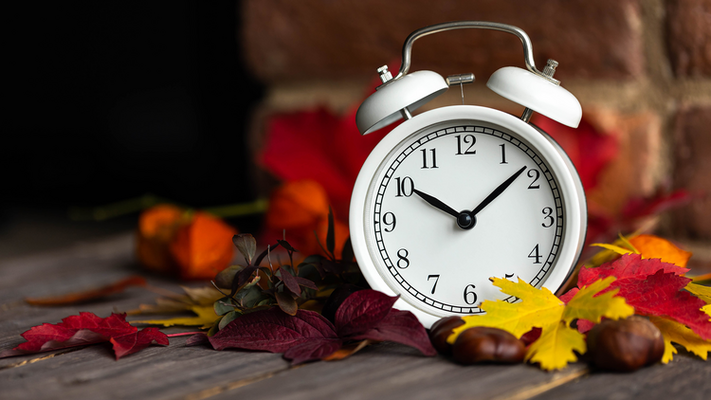
The Clock Went Back, Here's How To Make Your Body Catch Up
The transition to standard time each fall, when clocks are set back an hour, can be troubling. Sure, you get an extra hour of sleep for that one day, but the early-in-the-day darkness? The evening chill? Driving home at 4:00 p.m., just to see the sun setting? It's a lot to handle.
The disruption to our daily routines can have significant effects on productivity. The time change can lead to grogginess, difficulty focusing, and a general dip in energy as the body adjusts to a shift in its circadian rhythm. According to the American Academy of Sleep Medicine, disruptions like this can cause fatigue, reduced alertness, and lower overall productivity in the days and weeks following the change.
To combat this, it’s essential to leverage the earlier morning light that comes with the fall time change. Exposure to natural light is what regulates the body's internal clock. Circadian rhythms are the physical, mental, and behavioral changes an organism experiences over a 24-hour cycle. Light and dark have the biggest influence on circadian rhythms, but food intake, stress, physical activity, social environment, and temperature also affect them. The National Institute of General Medical Sciences emphasizes that daylight exposure is a key factor in boosting alertness and mood, making the first few hours after waking up an optimal time for high-focus work.
Maintaining a consistent sleep schedule is another critical strategy. Research from the Sleep Foundation highlights that a regular sleep pattern can help the body adjust more quickly to changes in the time. Going to bed and waking up at the same time each day helps reinforce your body’s natural rhythm, reducing feelings of fatigue and grogginess throughout the day.
Lighting also plays a significant role in productivity, especially as daylight diminishes earlier in the evening. A study from the Journal of Clinical Sleep Medicine found that bright artificial lighting can help combat the effects of early sunsets by promoting wakefulness and staving off early evening drowsiness. Working in a well-lit space can help maintain energy levels and focus during the late afternoon hours when natural light begins to wane.
And of course, the number one thing that we humans can do for our health - get outside! Taking breaks to get fresh air or engaging in short bursts of physical activity can counteract the afternoon energy slump. The CDC notes that even a 15-minute walk can increase energy levels and enhance cognitive function by boosting circulation and oxygen flow to the brain. Fall brings about gorgeous color palettes, from the orange of the leaves to the warm brown of our coffee. Head outside to enjoy them!
Make the most of a multi-faceted approach. There are always more options (daytime lamps, we're looking at you). For those prone to Seasonal Affective Disorder, adding light therapy or outdoor activities can be crucial to counteracting the dip in energy and mood. By recognizing the seasonal changes and planning accordingly, you can navigate the time shift and maintain steady productivity and well-being.