



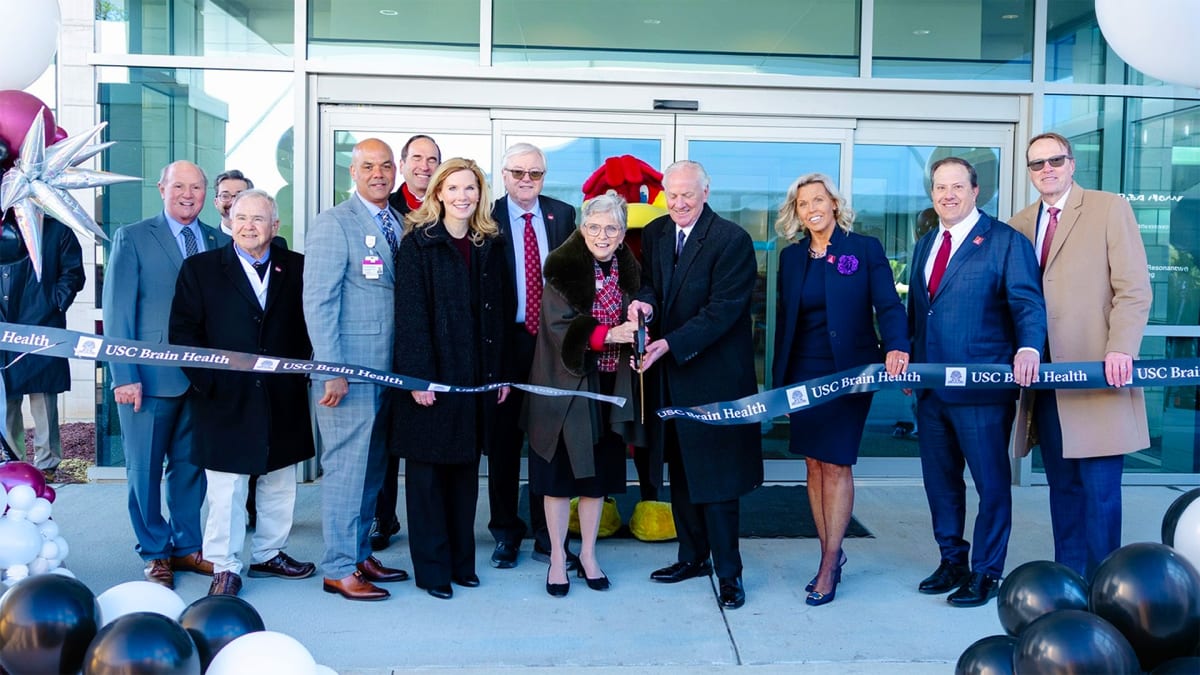
Memory Care Meets Major Innovation
In Columbia, a new kind of healthcare hub is taking shape: one built for the long road families face when memory starts to slip. The University of South Carolina has officially opened its new Brain Health Center, a 65,000-square-foot facility designed to bring clarity, coordination, and cutting-edge care to patients navigating Alzheimer’s and dementia. For a state where specialized neurological care has often meant piecing together appointments across providers, this marks a meaningful shift toward keeping both expertise and support closer to home.
Located on the university’s Health Sciences Campus, the center brings clinical care, advanced imaging, rehabilitation, and research into one streamlined experience. Instead of juggling multiple locations, patients and families can move through diagnosis, treatment, and ongoing care in a single setting. The facility includes neurology services, an eight-bay infusion suite, and dedicated spaces for physical, occupational, and speech therapy, all designed to support independence and quality of life over time.
Seeing It Sooner Changes Everything
At the core of the center is South Carolina’s only 7-Tesla MRI scanner, a level of imaging technology that allows physicians to detect subtle brain changes earlier and with far greater precision than standard systems. Earlier detection opens the door to earlier intervention, giving patients and families more time, more options, and more clarity when it matters most.
The facility also pairs that technology with a deeply integrated care model. Neurologists, researchers, and rehabilitation specialists work in sync, building personalized treatment plans that evolve alongside each patient. It’s a setup designed to reduce gaps in care while strengthening outcomes across the board.
More Than Medicine, It’s Momentum
The impact stretches well beyond patient care. Projects like this signal where South Carolina’s business and healthcare landscape is heading. Investment in advanced medical infrastructure brings high-skill jobs, attracts research funding, and strengthens partnerships between universities, healthcare systems, and private industry.
For Columbia, the ripple effect is immediate. The new center creates more clinical roles, more research opportunities, and more pathways for students training in health sciences to stay and build careers locally. It also strengthens the state’s growing network of cognitive care, helping extend specialized services into communities that have historically had limited access.
All in all, the Brain Health Center is not a distant upgrade, but a practical one. It shortens the gap between diagnosis and care, between research and real life, and between South Carolina and the kind of advanced treatment that families once had to leave the state to find.
Explore more of South Carolina’s medical momentum at https://guidetosouthcarolina.com/health-medical.