



Meet the History Beneath Your Feet
October offers a reason to reconsider familiar South Carolina ground. In Lancaster and Columbia, Native art, living communities and the history of resistance give Indigenous Peoples’ Day a local focus that lasts beyond a square on the calendar.
Start with a question close to home: How much do we know about the Native communities whose histories belong to the places we live? It is a useful question to carry into a museum, especially when the answer feels a little thin.
In downtown Lancaster, the Native American Studies Center at 119 South Main Street provides a place to begin. Its focus on the history, art and culture of South Carolina’s Native peoples brings the subject into specific, local view. Collections, galleries, archives and educational programming offer different ways to approach it, whether your curiosity begins with an artwork or a historical question.
That variety matters. Native history can feel abstract when reduced to a few names remembered from school. Spending time with art and cultural material invites closer attention to the people, knowledge and traditions behind them. Give yourself permission to stay and wander. There is no prize for finishing the gallery first.
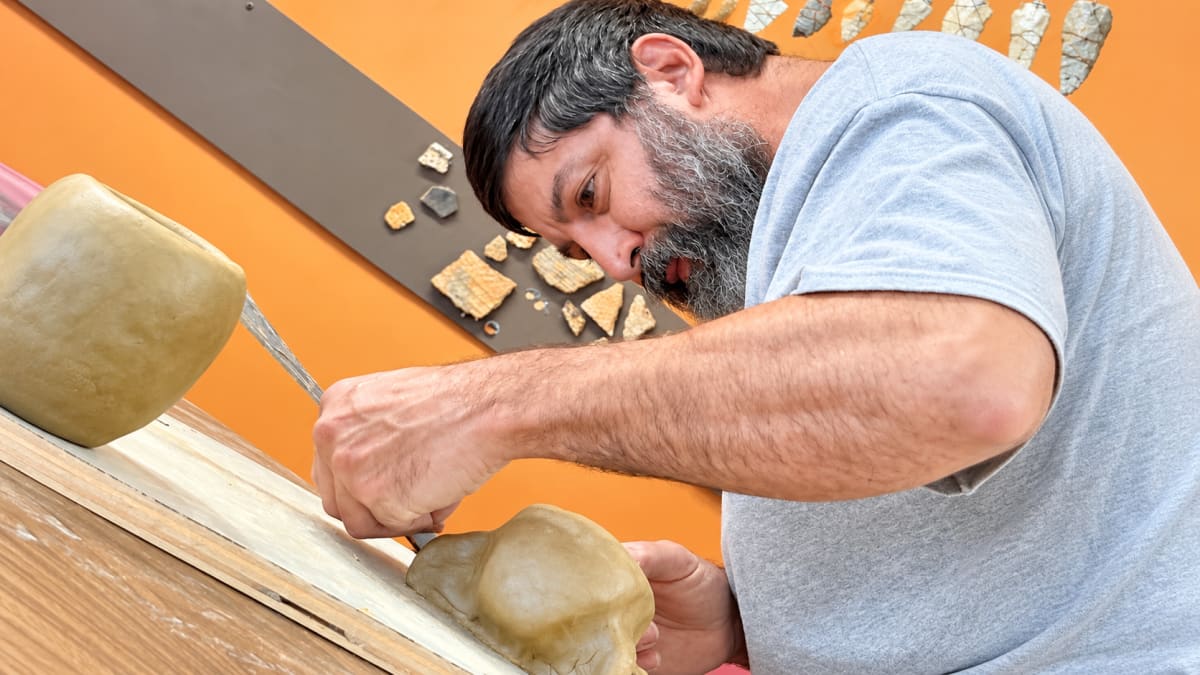
In Columbia, the South Carolina State Museum’s Native Communities of South Carolina exhibition connects contemporary communities with objects from its collection. Its “Traditions in Catawba Clay” section provides a particularly tangible example of cultural continuity.
Catawba pottery is among the Southeast’s oldest continuous art traditions. Potters hand-shape clay gathered from sacred clay holes near the Catawba River, carrying knowledge through generations. Those details give a vessel meaning beyond its finished shape: material, place and inherited skill belong in the same conversation.
The gallery also includes an excerpt from “Resilience & Revolution: Native Peoples in 18th Century South Carolina.” It examines Indigenous peoples’ struggles to retain their independence after the British established the Carolina colony. Alongside the pottery and contemporary community material, that history asks visitors to consider survival, sovereignty and cultural expression together.
For an October visit, the Columbia exhibition is included with general museum admission: $13 for adults, $11 for visitors 62 and older, and $10 for children ages 3–12. Members enter free.
Neither stop needs a special festival to make the month meaningful. Indigenous Peoples’ Day can be the prompt to visit, ask better questions and keep learning afterward. The strongest reason to go is the chance to understand South Carolina more fully, including the Native people shaping its present.
Find more places to keep exploring in the Guide to South Carolina museums directory: https://guidetosouthcarolina.com/museums