



Lowcountry Region
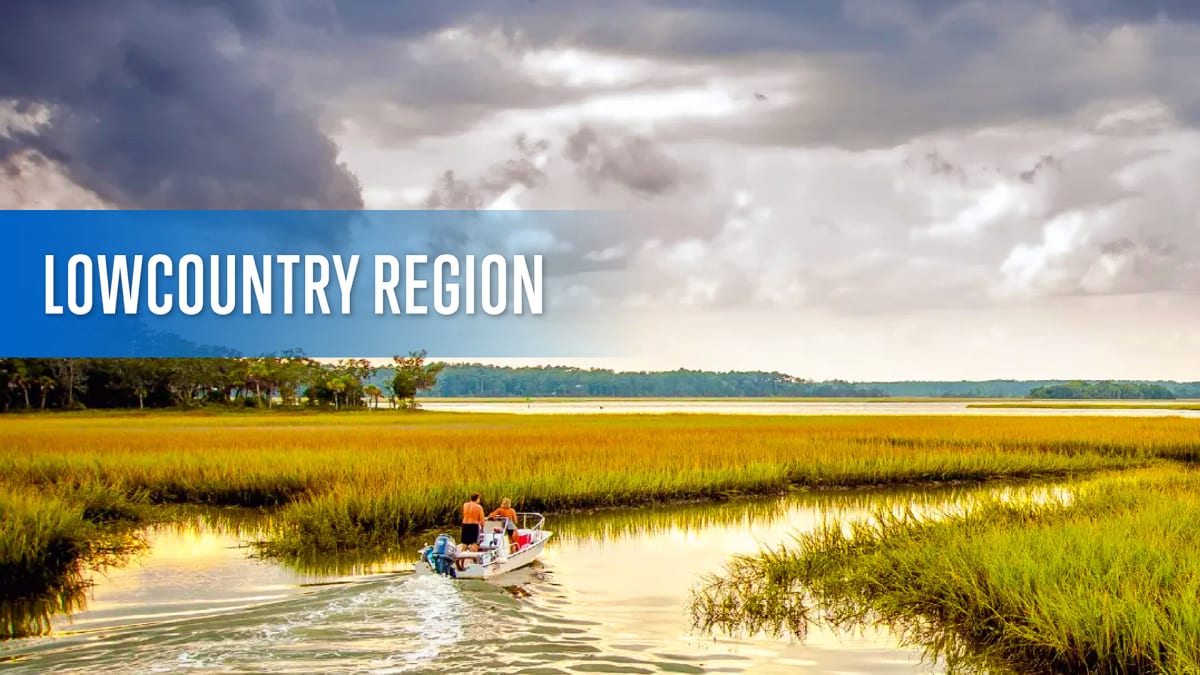
The Lowcountry of South Carolina unfolds at a slower, saltier pace, where marsh grass bends with the tide and the horizon always feels close. Anchored by Charleston, this region blends history, hospitality, and coastal living into something that feels both timeless and current. The presence of the Port of Charleston keeps global trade moving, while a growing tech and startup scene adds a quieter layer of momentum. Still, it’s the setting that defines it most, with tidal creeks, live oaks, and long stretches of water shaping how people live, work, and spend their time.
Charleston sets the tone with walkable streets and a steady stream of things to do. The Charleston City Market brings together local vendors and visitors under one roof, while the Battery offers waterfront views lined with historic homes. Food is central here, and restaurants like Husk and FIG lean into seasonal ingredients and regional traditions. The calendar stays full with events like the Spoleto Festival USA, where performances and exhibits take over the city each spring, drawing visitors from well beyond the Southeast.
Beyond Charleston, the Lowcountry opens up into quieter coastal towns that feel deeply connected to the water. Beaufort carries a slower rhythm, with moss-draped streets and views along the Henry C. Chambers Waterfront Park that invite you to linger. Nearby barrier islands like Hunting Island offer beaches, maritime forests, and one of the state’s most recognizable lighthouses. Farther south, communities near Bluffton continue to grow, balancing new development with a strong focus on conservation and preserving the natural landscape that defines the region.
That connection to land and water runs through everything, including the economy. Seafood remains a cornerstone, from shrimp boats heading out before sunrise to oyster roasts that double as social gatherings. Shipping and logistics tied to Charleston’s port drive large-scale growth, while tourism and hospitality support everything from boutique hotels to waterfront dining. At the same time, conservation efforts play a visible role, protecting marshes, estuaries, and coastal habitats that are as essential to the environment as they are to the region’s identity.
The Lowcountry doesn’t rush to impress. It lets the details do the work, from the way the light hits the marsh at sunset to the rhythm of boats moving through tidal creeks. Spend a little time here and it becomes clear that the draw is not one single attraction, but the feeling of being somewhere that understands its surroundings and moves in step with them.